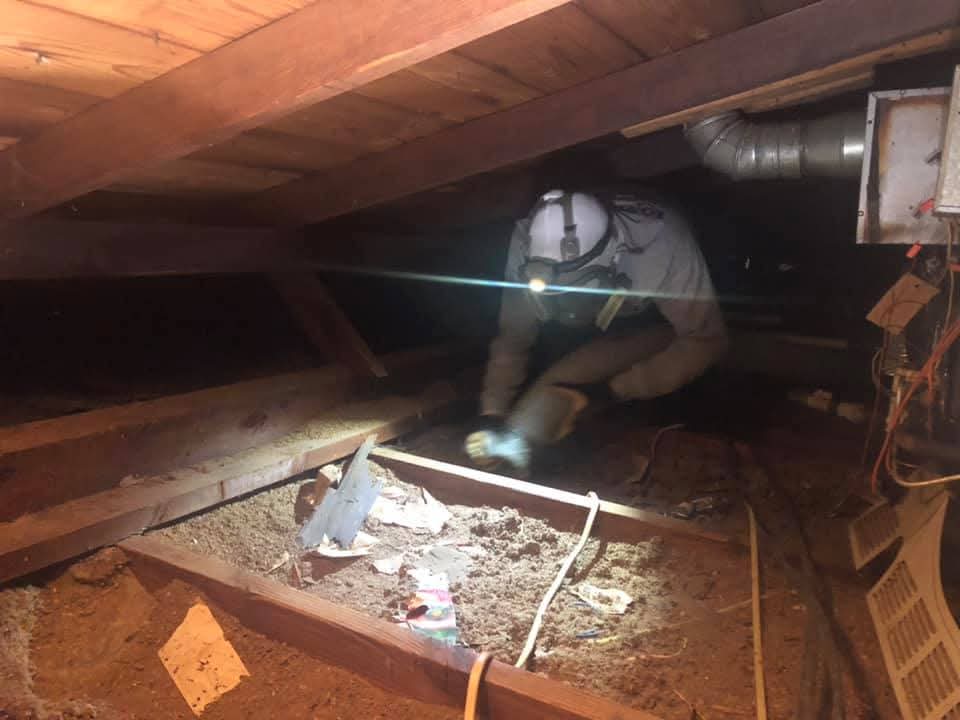
The safest way to hire insulation removal contractors is to choose an insulation removal company that can prove three things in writing: containment, proper disposal, and verification (photos + scope completion). If a contractor can’t explain how they’ll keep dust out of your living space, or what they’ll do if they find vermiculite, keep looking.
Insulation removal in Fort Worth isn’t just “vac it out and move on.” Done carelessly, it can spread dust through your home, miss contaminated pockets, or disturb materials that shouldn’t be touched. If you’re comparing options in Weatherford, TX, and nearby areas (including Fort Worth), this guide shows exactly how to hire safely, without relying on marketing claims.
What Makes Insulation Removal “Unsafe,” And When Should You Pause The Job?
Common mistake: Treating every attic like the same job. Some are straightforward. Others require you to stop and reassess.
Use this quick “pause” checklist:
- Vermiculite present (looks like small gray/brown pebbles): EPA says you should assume it may contain asbestos and do not disturb it.
- Wet insulation with roof staining or musty odor: removal without fixing the moisture source is a repeat expense.
- Rodent contamination (droppings, nesting, chewed wiring): needs containment and a defined cleanup plan.
- Heavy dust migration into return vents: removal should be paired with air/duct sealing decisions.
Decision rule: If you suspect vermiculite or unknown legacy materials, stop the “vacuum quote” and get the right assessment before anyone stirs it up.
Local factor: North Texas storms and roof penetrations can introduce moisture into attic insulation, and wet insulation loses performance fast, so a safe contractor asks about leak history, not just square footage.
What Should A Reputable Insulation Removal Company Show You Before Day One?
Common mistake: Trusting a verbal promise. For safety work, you want documentation.
Ask for these before you schedule:
- Proof of liability insurance + workers’ comp (not “we’re covered,” but actual documents)
- Who is doing the work (in-house crew vs subcontractor)
- A written scope that includes containment, PPE, vacuum/filtration, and disposal
- How they’ll protect the home: attic hatch tenting, floor protection, and return-air precautions
Decision rule: if the insulation removal company won’t put containment and disposal in writing, assume it won’t happen.
Local factor: Many homes in Weatherford, TX, have pull-down attic stairs and tight access. That access constraint changes how pros stage vacuum hoses, bagging, and cleanup, and it changes the risk of dust in living areas.
How Do Pros Keep Dust, Fibers, And Odors From Spreading Through The Home?
Common mistake: Thinking “a vacuum” automatically means “clean.” It doesn’t.
Here’s the practical test question: “How will you keep negative pressure in the work area and prevent dust from entering the house?”
Look for specifics like:
- Containment at the attic access (plastic tenting/zipper door)
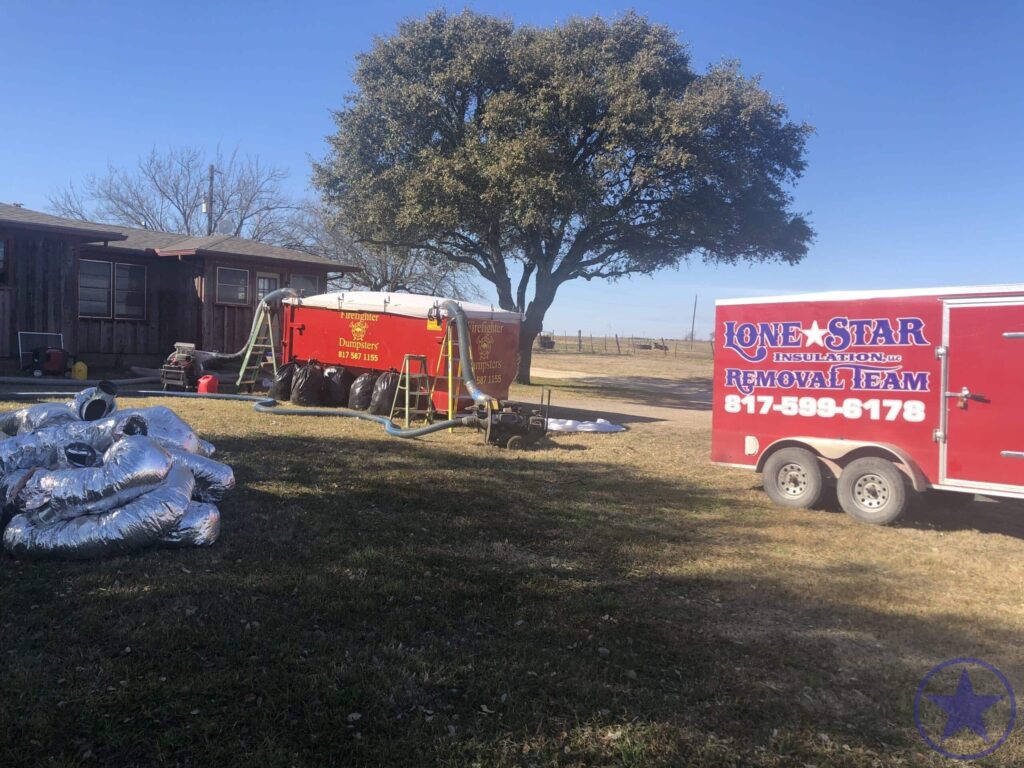
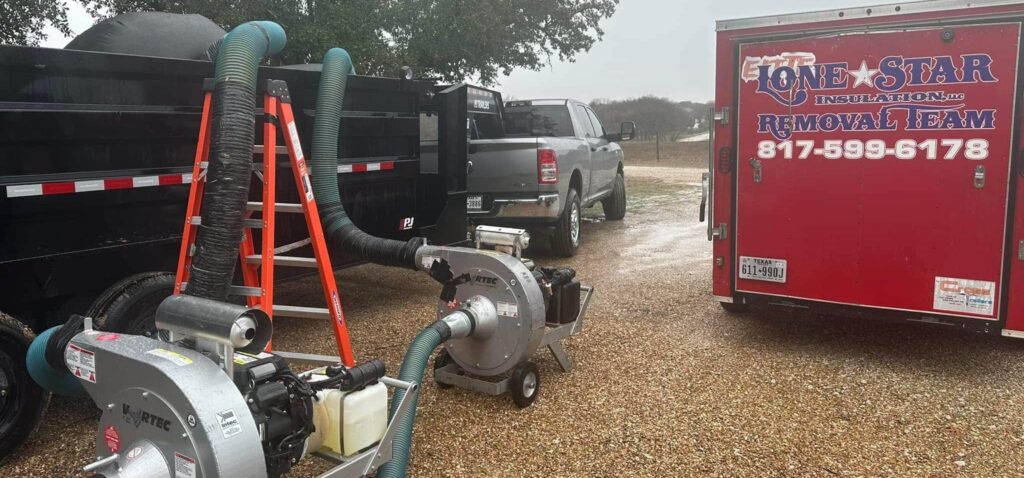
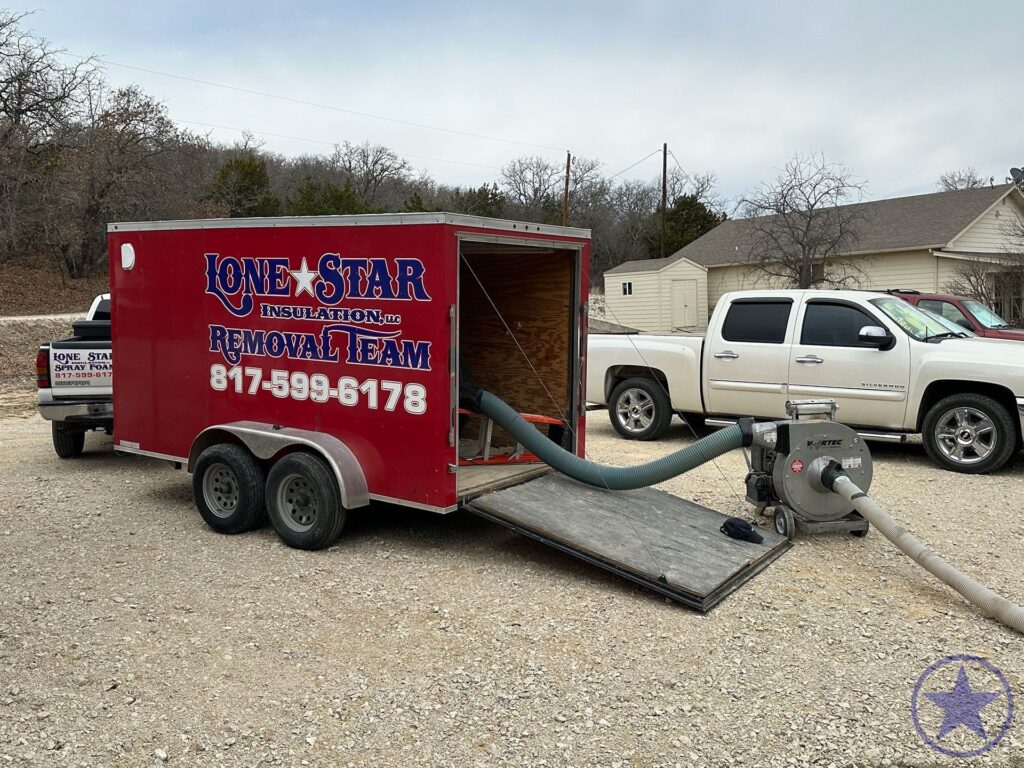
- Keeping the vacuum collection and bagging flow organized so that debris isn’t dragged through hallways.
- Filtration/HEPA strategy when conditions warrant it (especially with heavy dust or contamination)
- Register/return precautions if the HVAC could pull attic air during the job.
Decision rule: “We’ll be careful” is not a dust-control plan.
Local factor: In Weatherford, TX, attics run brutally hot in summer. That heat makes crews rush. The safest insulation removal contractor in Weatherford, TX plan early starts, realistic pacing, and clear stop points so quality doesn’t drop at 2 PM.
What Does A Safe Removal Project Look Like Step-By-Step?
A reputable insulation removal company should follow a predictable sequence. If their estimate skips half of this, you’re not comparing the same job.
- Assessment + photos: Insulation type/depth, moisture stains, rodent evidence, and major air leaks.
- Containment + protection: Pathway protection, attic hatch tenting, and isolation of the work zone.
- Controlled removal: Vacuum removal + hand detail in corners/eaves (where sloppy crews leave 15–25% behind).
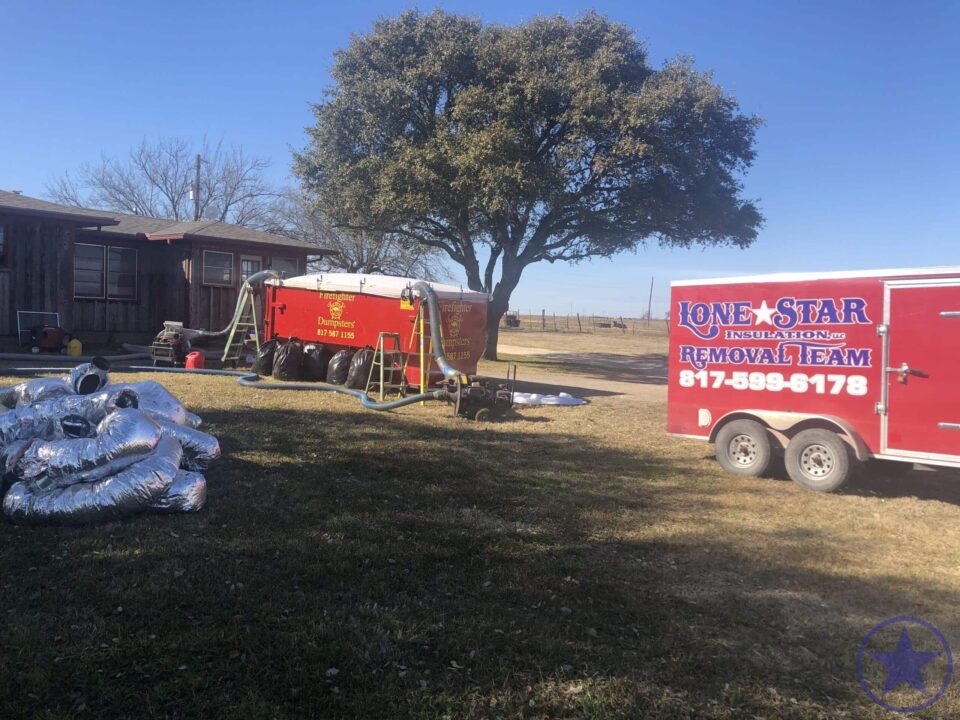
- Bagging + disposal: Sealed bags, clean load-out, and defined disposal method.
- Cleaning the “real” problem areas: top plates, chases, and penetrations—because that’s where air leaks live.
- Air sealing (before new insulation): Sealing penetrations matters because insulation alone doesn’t stop air movement; DOE notes air sealing is a cost-effective way to cut heating and cooling costs.
- Re-insulate correctly: Material choice based on attic design, ducts, and goals.
- Verification: Final photos, depth markers, and a walkthrough so you can confirm coverage at eaves and around the hatch.
Decision rule: If they don’t include verification, you’re paying for a result you can’t confirm.
What Affects Cost And Timeline In Weatherford, Tx, And What Should Be In The Quote?
Common mistake: Comparing “price per square foot” while ignoring the job conditions that create safety risk.
Cost/timeline drivers you should see spelled out
| Driver | What it changes | What is required in the quote |
| Access difficulty (tight hatch, steep stairs) | More setup time + higher dust risk | Containment method + cleanup plan |
| Contamination (rodents, heavy odor) | More PPE/cleaning + disposal complexity | Defined cleanup steps + bagging/disposal detail |
| Wet insulation/leaks | May require pause + repair coordination | Moisture source notes + “stop work” rule |
| Air sealing add-on | Higher upfront, better outcome | List of areas to seal + verification photos |
| Re-insulation choice | Changes material + install time | Target R-value/depth markers (Energy Star guidance can help set targets). |
Local factor: Older homes and additions around Parker County often have odd transitions and open chases. Those chases are where safety (and energy savings) are won or lost; make sure they’re explicitly included.
When Does Spray Foam Removal Require Extra Precautions?
Common mistake: Assuming spray foam removal is the same as removing fiberglass or cellulose.
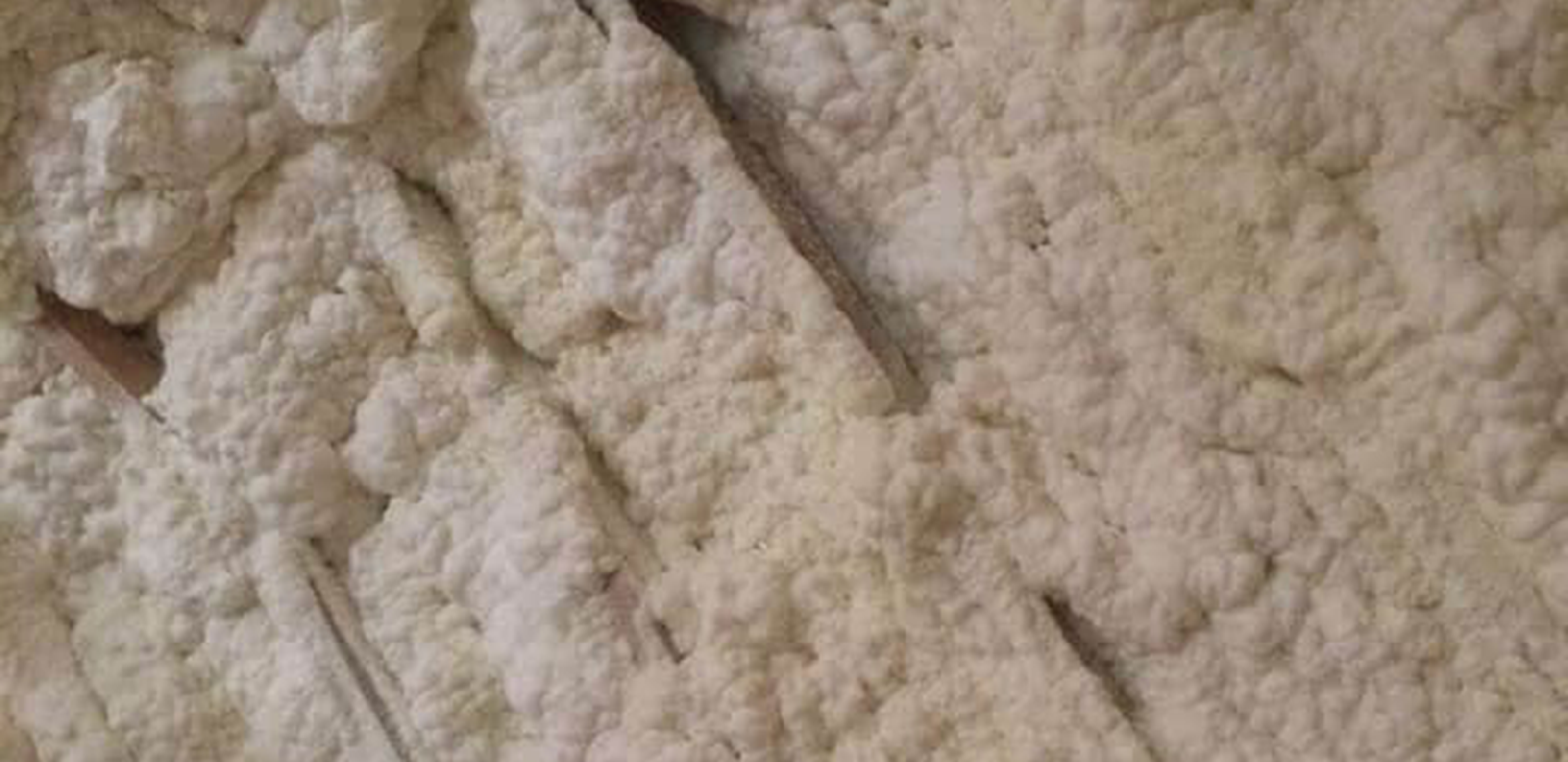
If you’re dealing with spray foam insulation removal in Weatherford, TX, ask how they’ll control dust/particulates and whether any re-application is planned. If new spray foam is to be installed, ventilation and isolation matter; EPA’s spray polyurethane foam ventilation guidance emphasizes airflow across the spraying area, isolation/containment, and exhausting to a safe location.
Decision rule: If foam work is part of the project and they can’t explain ventilation and containment, you don’t have a safety plan; you have a schedule.
How Do You Choose Between Two Contractors?
Use a simple scorecard:
- Scope completeness (containment + disposal + air sealing + verification)
- Clarity (can they explain their process in two minutes without dodging?)
- Documentation (insurance, photos, written exclusions)
- Stop-work rules (vermiculite/asbestos suspicion, active leaks, electrical damage)
Decision rule: Choose the contractor with the most complete written scope, even if it’s not the cheapest. The cheapest bid often becomes expensive when the home needs a second cleanup.
Conclusion
Hiring safely isn’t complicated: pick an insulation removal company that documents containment, disposal, and verification, and that knows when to pause for vermiculite or moisture issues. If you’re looking for an insulation removal contractor in Weatherford, TX who treats safety and cleanliness like part of the job (not an optional upgrade), Lone Star Insulation can inspect the space, explain the risks, and provide a clear, written scope before any insulation is disturbed.
FAQs
Is insulation removal dangerous?
It can be if dust control is poor or if certain legacy materials are disturbed. That’s why containment, filtration, and stop-work rules matter.
Can I remove attic insulation myself?
Small areas are one thing; full attic removals are messy and risky without proper equipment and containment. If you suspect vermiculite, don’t disturb it.
What should an insulation removal quote include?
Containment method, removal method, disposal details, cleanup scope, any air sealing, and verification (photos/depth markers).
How long does insulation removal take?
A straightforward attic can be a day; contamination, tight access, and air sealing extend timelines. The quote should explain the drivers.
Do I need air sealing after removal?
If you’re paying to “start fresh,” sealing major leaks before reinstalling insulation is usually where comfort improves most. DOE supports air sealing as a cost-effective way to reduce heating/cooling costs.
What happens to the old insulation after removal?
It should be bagged and disposed of appropriately. Ask where it goes and whether disposal fees are included.
Should I remove insulation or just add more?
If it’s wet, contaminated, or blocking ventilation, removal is usually the better call. If it’s clean but thin, topping off might work; your contractor should explain why.
Is “Insulation Removal Fort Worth” pricing relevant to Weatherford?
Sometimes, but access, contamination, and scope details matter more than the city name. Compare scopes, not just totals.


 Kristen Hull


 Elizabeth Clymer
 Chuck Lee
 Creeks Edge Cottages
 Eric Rohlfing
 Billy Atwood
 Leonard Sanmann
 jennifer westbrook
 Missy Alcocer
 B R
B R