Hiring an insulation removal contractor in Weatherford, TX is mostly about risk control: contain the mess, remove the right material, and document what was done. If the quote doesn’t spell out contamination screening, containment, disposal, and verification, you’re not comparing real apples to apples, especially for insulation removal in Weatherford, TX.
When Do You Actually Need Insulation Removal?
A common mistake is removing insulation just because it’s old. Age alone isn’t the reason. Use this decision rule:
- If insulation is wet, moldy, pest-contaminated, or hiding electrical/roof issues → remove it.
- If insulation is dry and clean but thin/uneven → you may be able to air-seal and add new insulation over it instead.
Local factor: In this region, sudden cold snaps, roof leaks after storms, and HVAC condensation can turn “mostly fine” insulation into a wet mess fast. If you’re requesting insulation removal for Weatherford, ask the contractor to explain why removal is needed in your specific attic, not just “it’ll help performance.”
What Quick Checks Tell You The Insulation Is Contaminated Or Failing?
Do these checks before you call anyone. They help you describe the job accurately and avoid a vague quote.
Quick checklist (10 minutes):
- Smell test: A strong musty odor near the attic hatch can mean moisture or animal activity.
- Touch test (gloved): Insulation that clumps, mats, or feels damp needs investigation.
- Spotting test: Look for dark staining on insulation or roof decking.
- Rodent signs: Droppings, nesting, gnaw marks, or trails in loose-fill.
Decision rule: If you see droppings or nesting, treat the attic as contaminated until it’s cleaned correctly. CDC guidance for cleaning rodent urine/droppings stresses wetting with disinfectant and avoiding actions that kick particles into the air.
One more red flag: vermiculite insulation (often pebble-like). EPA advises you should assume vermiculite insulation may be asbestos-contaminated and avoid disturbing it; use a trained professional if it must be removed.
What Should A Professional Removal Process Look Like?
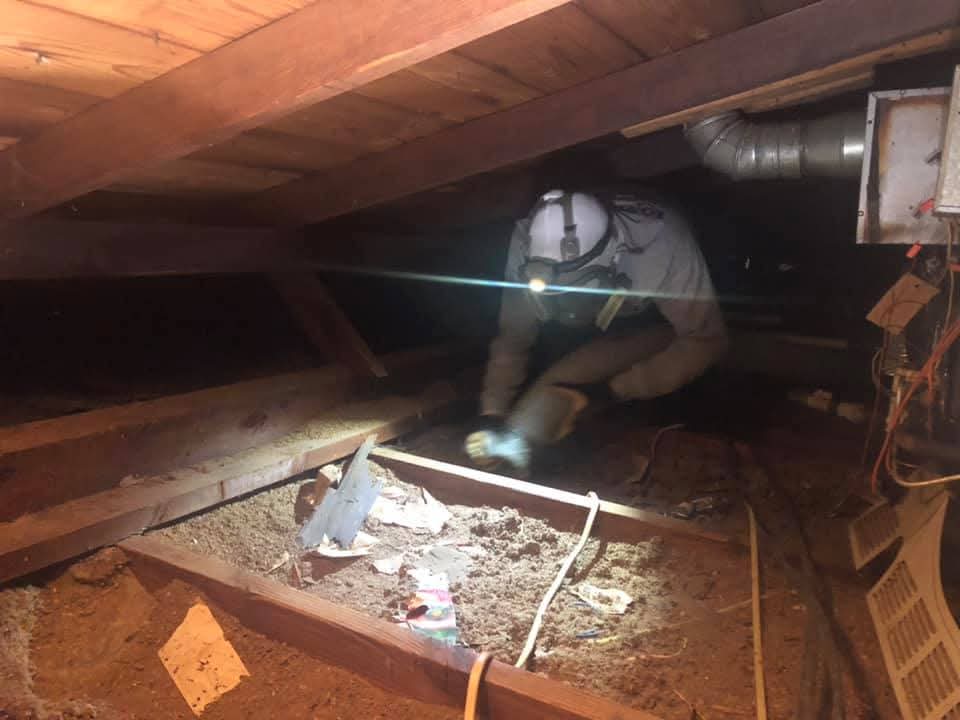
If you’re hiring an insulation removal contractor in Weatherford, TX, listen for a process that protects the living space and the crew. Here’s a clean, homeowner-friendly workflow:
-
Site assessment + hazard screen
They check for roof leaks, bath fan venting problems, vermiculite, and heavy pest contamination. If vermiculite is present, the scope should change immediately.
-
Containment plan
They protect floors, seal the attic access area, and plan the path in/out so debris doesn’t spread.
-
PPE and respiratory plan
Real crews don’t “wing it.” OSHA’s respiratory protection standard requires a respiratory protection program when respirators are necessary.
-
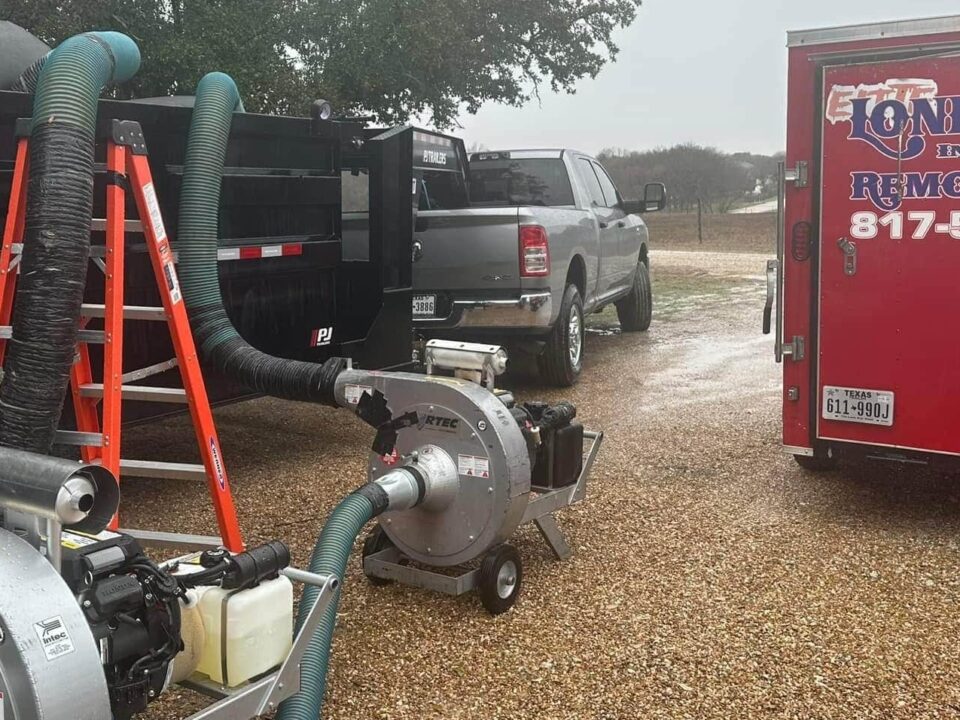
Removal using appropriate equipment
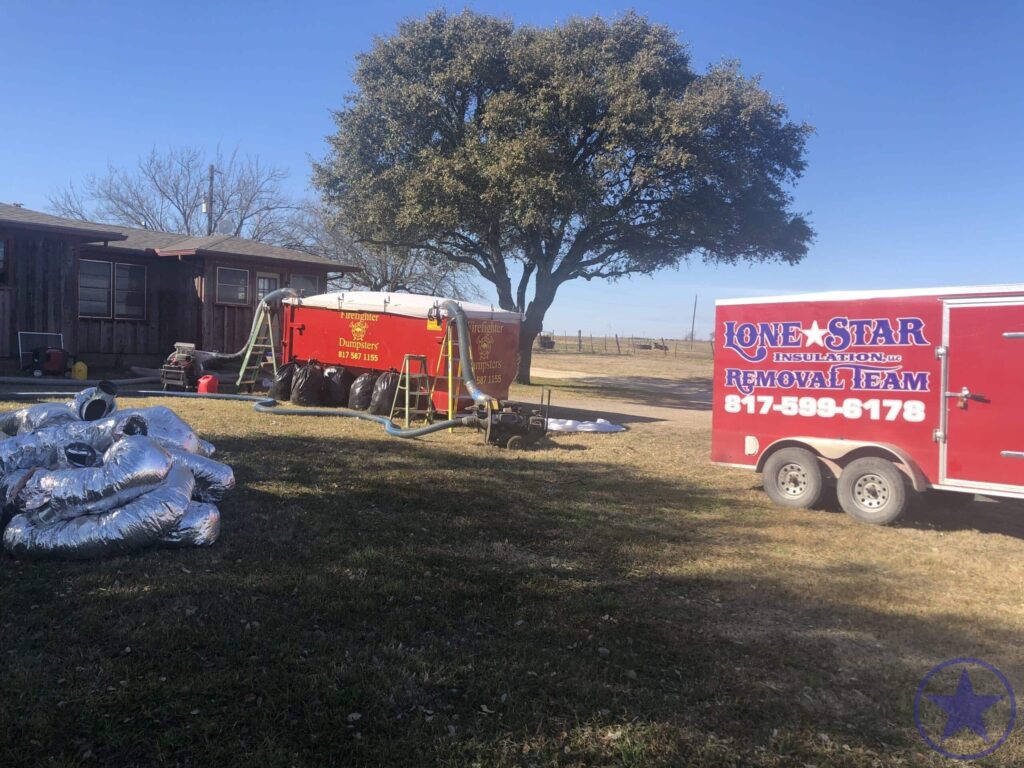
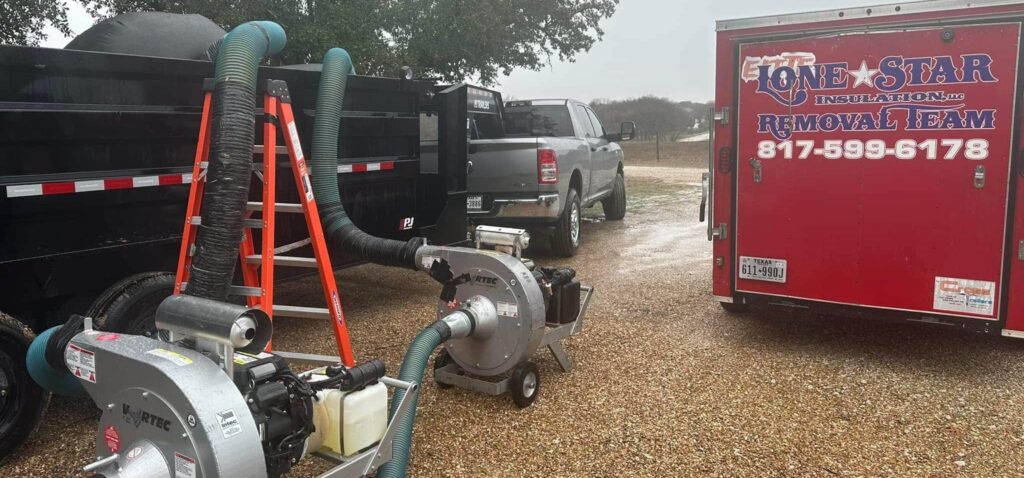
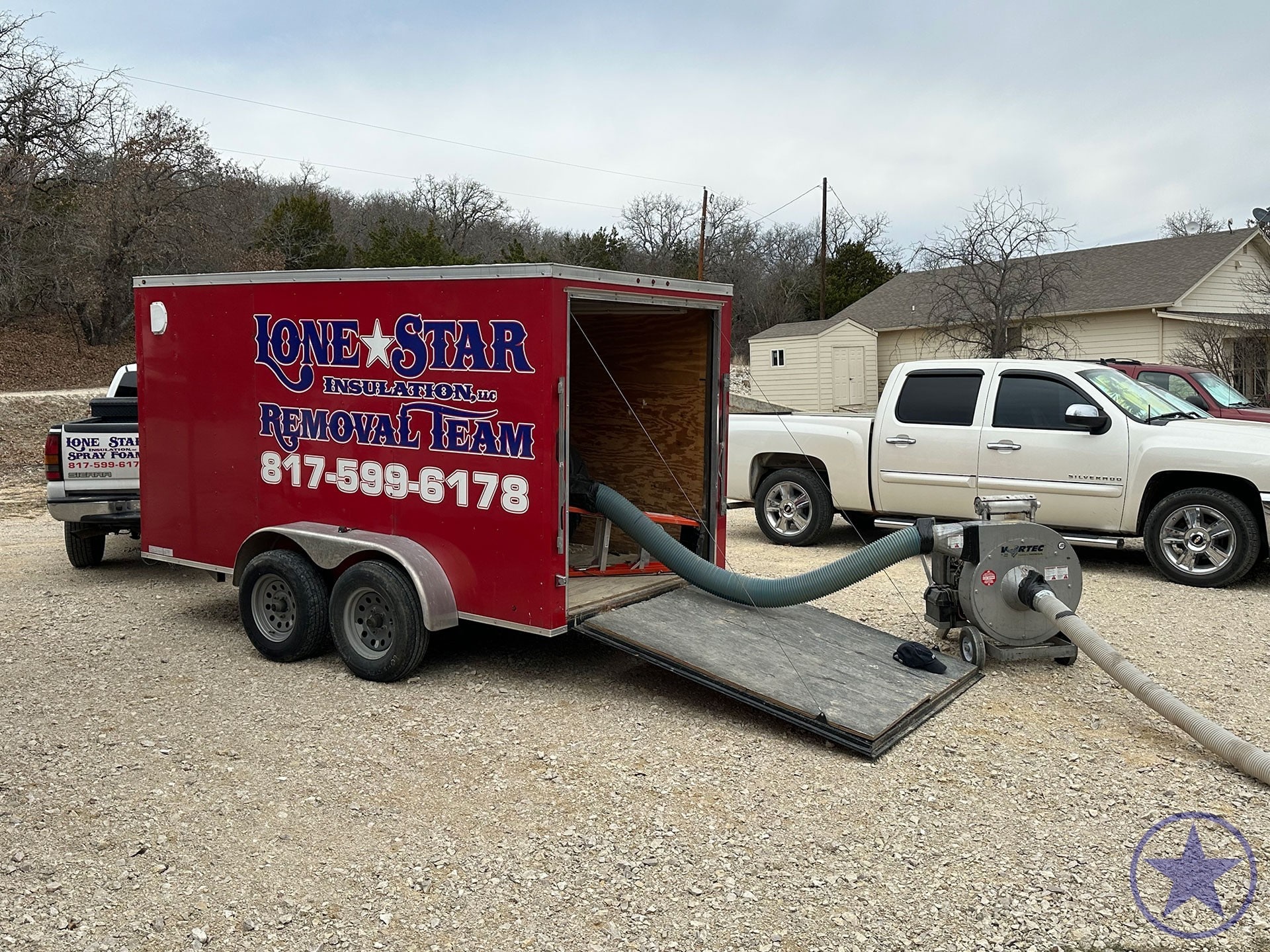
Loose-fill is commonly removed with vacuum systems; batts are bagged and removed in sections. The goal is controlled removal, not a dust storm.
-
Detail work
They remove contaminated debris from corners, around duct chases, and at eaves where pests often nest.
-
Sanitize (if contamination is confirmed)
If rodent contamination is involved, cleaning steps should align with public-health guidance (wet disinfect, wipe up, bag/dispose).
-
Disposal and haul-off
The quote should state where the material goes and how it’s handled. For certain waste types, disposal must follow specific rules; at a minimum, homeowners should use official Texas HHW resources for guidance.
-
Verification
You should get photos of the cleared attic floor and problem areas, plus a short scope completion note.
If the contractor can’t describe steps 1–8 clearly, you’re likely getting a “remove it and leave” service instead of a controlled remediation-style job.
What Should Be Included In An Insulation Removal Quote?
Use the table below to force clear bids for insulation removal for Weatherford, TX. It also makes contractor comparisons easy.
| Quote item you should see | Why it matters | Quick “yes/no” check |
| Reason for removal (wet, pests, vermiculite risk, etc.) | Prevents unnecessary removal | “Did they diagnose the cause?” |
| Containment plan at attic access | Controls dust inside | “Do they protect + seal the hatch area?” |
| Equipment/method (vacuum vs manual) | Sets expectations | “Do they explain how it’s removed?” |
| Bagging/haul-off/disposal description | Avoids surprise add-ons | “Is disposal spelled out?” |
| Sanitizing scope (if needed) | Stops odors/contamination | “Is sanitation included or optional?” |
| Verification deliverables | Proof you got what you paid for | “Do you get photos + sign-off?” |
Cost driver reality: the biggest drivers are attic access, depth of insulation, contamination level, and how much detail work is required. Anyone quoting without seeing the attic is guessing.
How Do You Compare Two Contractors Without Getting Tricked By Price?
Here’s the simplest decision rule:
If one bid is cheaper because it skips containment, sanitation, or verification, it’s not cheaper; it’s incomplete.
Ask each bidder the same three questions:
- “What do you do to keep dust out of the living space?”
- “How do you handle rodent-contaminated insulation?” (Listen for disinfect-first logic.)
- “What do you give me at the end so I know it’s done?” (Photos + scope sign-off.)
This is where an insulation removal contractor in Weatherford, TX either sounds professional…or vague.
What Safety And Disposal Rules Should You Expect On A Real Job?
Two big issues keep popping up: asbestos risk and confusion about disposal.
- Vermiculite/asbestos risk: EPA recommends leaving vermiculite undisturbed and treating it as if it contains asbestos; use trained professionals if removal is needed.
- Rodent contamination: CDC advises wetting droppings with disinfectant and wiping up, avoiding dry sweeping/vacuuming that can aerosolize particles.
- Disposal: Texas has official Household Hazardous Waste guidance and programs to help residents dispose of hazardous materials properly.
If a contractor dismisses these topics, that’s a sign they treat removal as “just messy work” instead of a safety-first scope.
How Can You Prevent The Same Problem From Coming Back After Removal?
Removal is the reset. Prevention is what protects the investment.
Quick prevention checklist:
- Fix the moisture source (roof leak, bath fan dumping into attic, duct sweat).
- Air-seal the attic floor before new insulation goes in (top plates, plumbing penetrations, hatch framing).
- Correct ventilation paths so new insulation doesn’t trap moisture.
- Pest-proof entry points at eaves and roofline gaps.
Decision rule: If you don’t fix the cause, you’ll pay for removal twice.
FAQs
How long does insulation removal take?
Many jobs are done in a day, but access and contamination can extend the timeline. The more detailed the work on corners/eaves, the longer it takes.
Do I need to leave the house during removal?
Often no, but you should avoid the work zone. If the scope includes sanitation for contamination, ask what areas are isolated and how dust is controlled.
Can I DIY insulation removal?
You can remove clean batts in small areas, but loose-fill and contaminated insulation are where DIY becomes risky fast. If you see droppings or suspect asbestos risk, stop and get guidance.
What if I find vermiculite insulation?
Treat it as a red flag. EPA says assume vermiculite may be asbestos-contaminated and avoid disturbing it; use trained professionals if it must be removed.
What’s the cleanest way to handle rodent droppings in an attic?
CDC guidance focuses on wet disinfecting first, then wiping up and disposing—avoid creating airborne dust.
Do I have to remove old insulation before adding new?
Not always. If it’s dry and clean, many projects focus on air sealing and adding new insulation over the top. If it’s wet, moldy, or pest-contaminated, removal is usually the right call.
What should I get at the end of the job?
Photos of the cleared attic floor, a scope completion note, and any disposal documentation promised in the quote. This matters for resale and for warranty disputes.
Who should I call for insulation removal in Weatherford, TX?
Start with a contractor who will inspect, write the scope clearly, and document verification. For an insulation removal contractor in Weatherford, TX, contact Lone Star Insulation and fill out the request-estimate-form to get started.


 Kristen Hull


 Elizabeth Clymer
 Chuck Lee
 Creeks Edge Cottages
 Eric Rohlfing
 Billy Atwood
 Leonard Sanmann
 jennifer westbrook
 Missy Alcocer
 B R
B R